
What 12,000 Years of Lime Can Teach Us
Nobody has ever stood in a forest and thought, "You know what this needs? A coat of builder's beige."
Most of us spend our lives in boxes of concrete, drywall, and plastic, then wonder why we need a vacation just to feel human again. My belief is that our bodies feel calmer around the stuff nature is made of. Call it biophilia, call it vibes, call it your nervous system regulation. Research on time in nature points in that direction irrevocably, and this shapes our core design philosophy.
Lime wash is one of my favorite ways to bring outside inside with you. Up close, it doesn't behave like paint. It reads like weather: clouded, variegated, shifting with the light. No two feet of wall look the same.
The world says quick, quick, quick, even more so now in the age of AI. Cover everything in plastic, pick one color, spray the whole house. To be fair, there's a time and place for that. But your home is where you'll spend most of your life, which is a lot of hours to run on autopilot. Choosing what goes on your walls on purpose takes context, and history is one of our best resources for that, especially when we can pair it with modern tools.
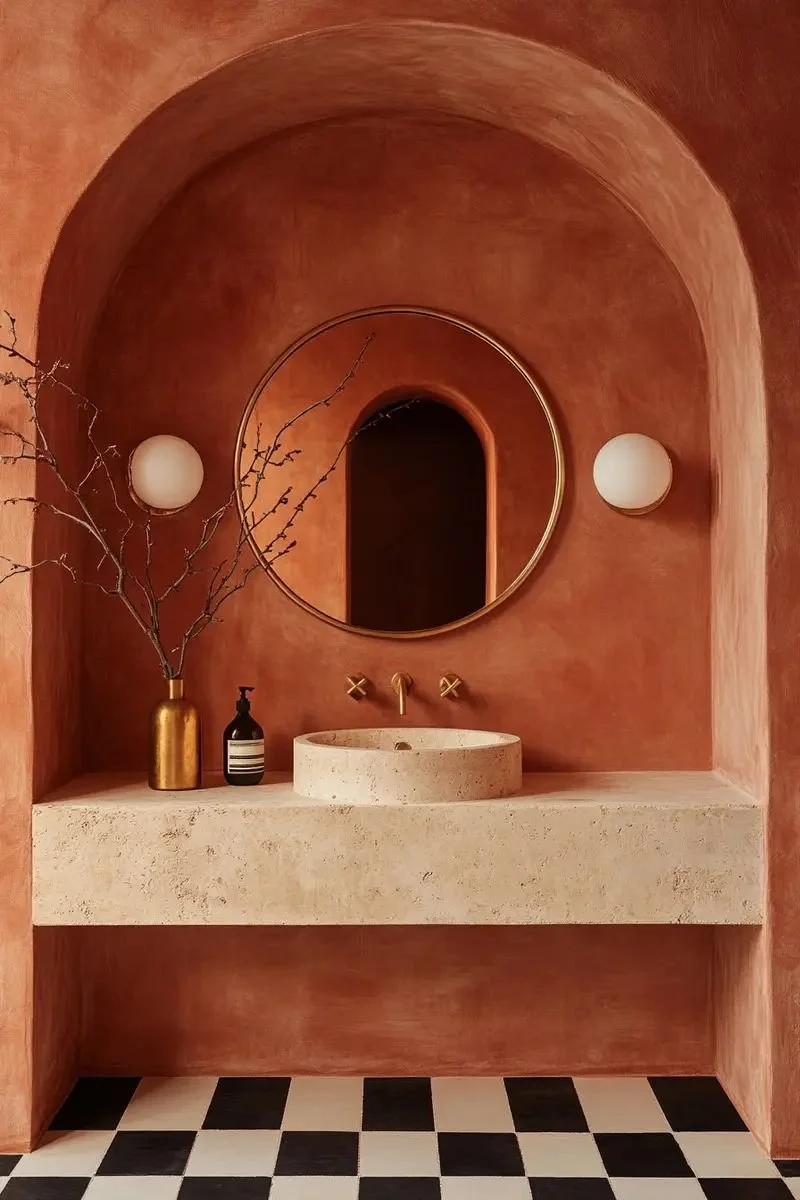
What lime wash is (and isn't) | Limestone gets burned into quicklime, mixed with water into a putty, and applied to a wall. Then it does something wonderfully weird: it slowly takes carbon dioxide from the air and hardens back toward the stone it started as. Your wall spends its whole life quietly turning back into a rock. If that isn't a spiritual practice, I don't know what is.
One distinction: plaster is the thick, built-up surface. Wash is the thin, watery coat of slaked lime and pigment. Most of lime's history is a plaster history, and most people today use it as a wash.
Origins, plural | There is no single starting point. Lime plaster covering burials at a Natufian cemetery dates to about 12,000 years ago. Large-scale production is generally tied to farming societies about 10,000 years ago. And the Levant wasn't the only place it happened. In the Maya region, lime appears in architecture by the Middle Preclassic period, roughly 1000–400 BCE, and the techniques have been passed down to the present day.
Traditions that are still holding it down
Wherever people made lime, they used what was local, and the recipes carry that ancestral knowledge.
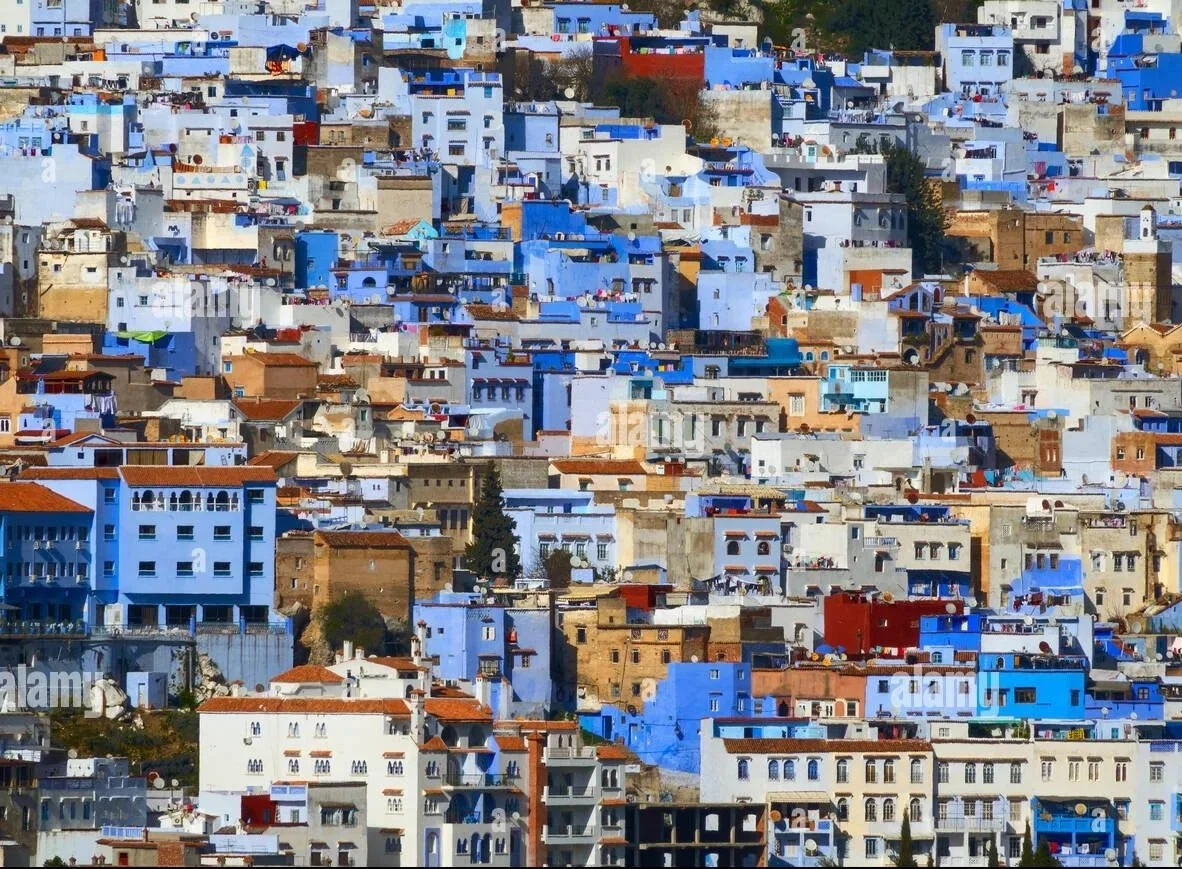
India. In South India, Madras chunam was a shell-lime plaster. Egg whites and jaggery, mixed with water steeped in coconut husks, then rubbed with rock crystal or a rounded stone until polished; walls made this way were enduring and sparkled like marble. Until I immigrated, I really thought that walls were textured; flat white became a part of my design vocabulary much later. I still remember visiting cities where the entire city was color-coordinated; Jaipur is called a blue city for a reason, and this place will make you feel anything but blue!
Yemen. Qadad is a lime plaster treated with slaked lime and oils and fats, a technique over a thousand years old, and it can take more than a year to set fully. Somewhere, a project schedule just wept. It was in continuous use in southern Arabia from the first century BCE into modern times.
Japan. Shikkui is a lime plaster made with seaweed and plant fibers such as hemp, applied in layers from coarse to fine. At Himeji Castle, plaster protects the wooden structure from fire and wet rot, and a typical recipe combined lime from stone and from shellfish with hemp fiber and a boiled seaweed paste.
The Maya. Lime production in Maya culture is associated with birth and fertility, and lime itself is conceived as a young fertile woman. Maya lime plaster is considered one of the best, and researchers found traces of organic matter in plaster from Copán, thousands of years ago.
The throughline: nobody used just lime and water. Each place added its own plants, sugars, fats, or fibers, tuned to a climate and indigenous resources.
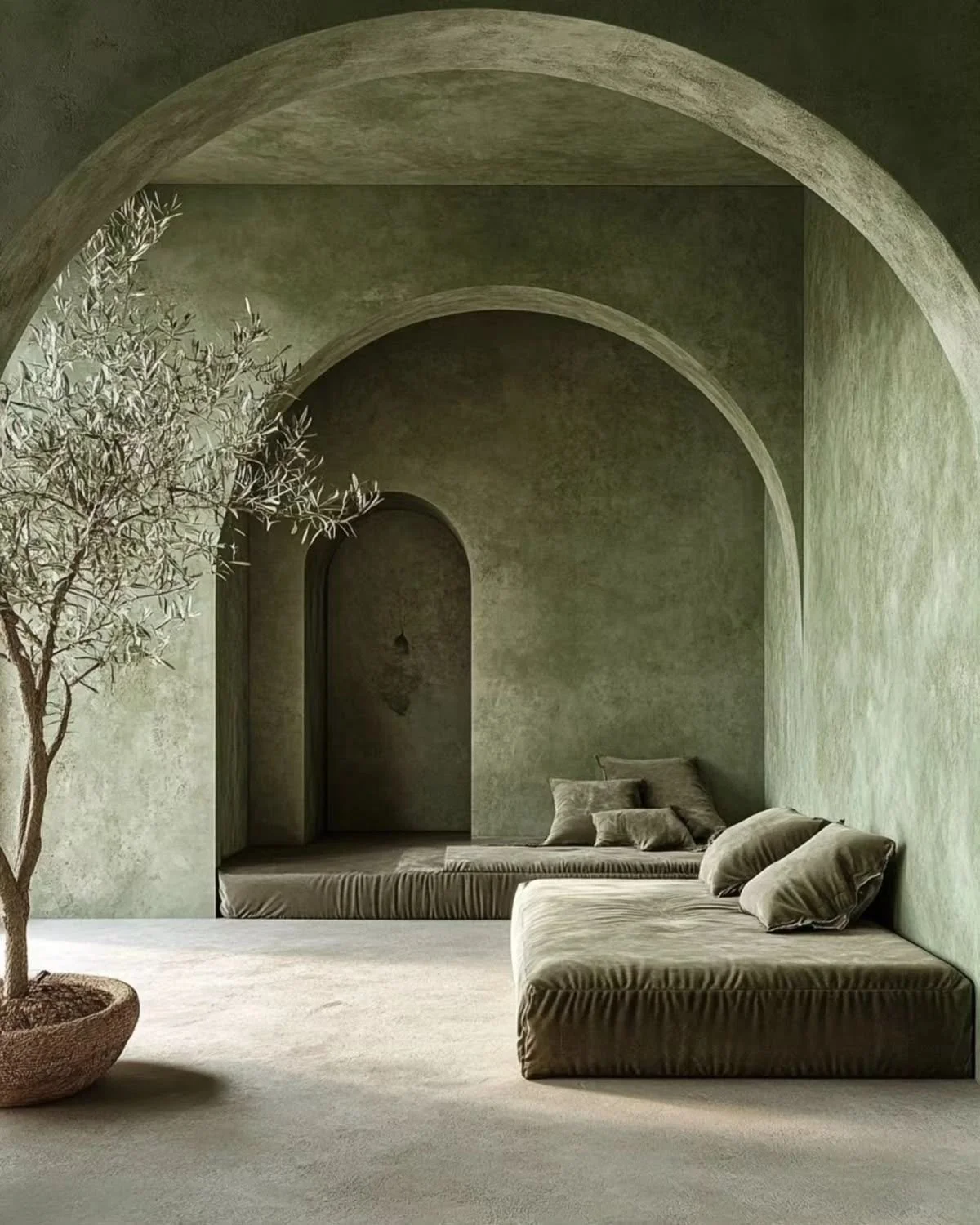
Knowledge that got corrupted
Somewhere along the way we decided faster was better. Quick to build, quick to paint, quick to move in. A lot of intentional, skilled, hands-on work quietly lost its seat at the table. Why learn to layer lime when a can of paint will do the job by Sunday?
The knowledge didn't disappear because it stopped working. Part of what got lost was a way of connecting with the spaces we inhabit. What counts as clean, pristine, and finished, meaning flat, uniform, and factory-perfect, isn't a law of nature. It's an idea with an oppressive colonial history. Victorian ideas of hygiene worked as an ideological tool of colonial aesthetics that has permeated every fabric of our discernment around taste and aesthetics.
To be clear, the answer isn't "stop using white." Lime wash is often white. Madras chunam builders used only the whitest shells for the top coat and left jaggery out of the last coats, because its brown tint would dull the white.
Lime wash is having a moment. Design Press this year calls it a comeback, noting that boutique paint companies have revived it in the U.S. I love that people are paying attention to what they live inside and how it makes them feel. But moments end. That coverage tends to lead with Pompeii and the Parthenon or the look of Tuscany, while the traditions above rarely make the caption. If we treat lime as an aesthetic, we speed it up all over again.
If we treat it as a craft with a lineage, we might actually keep it.
From plaster to wash
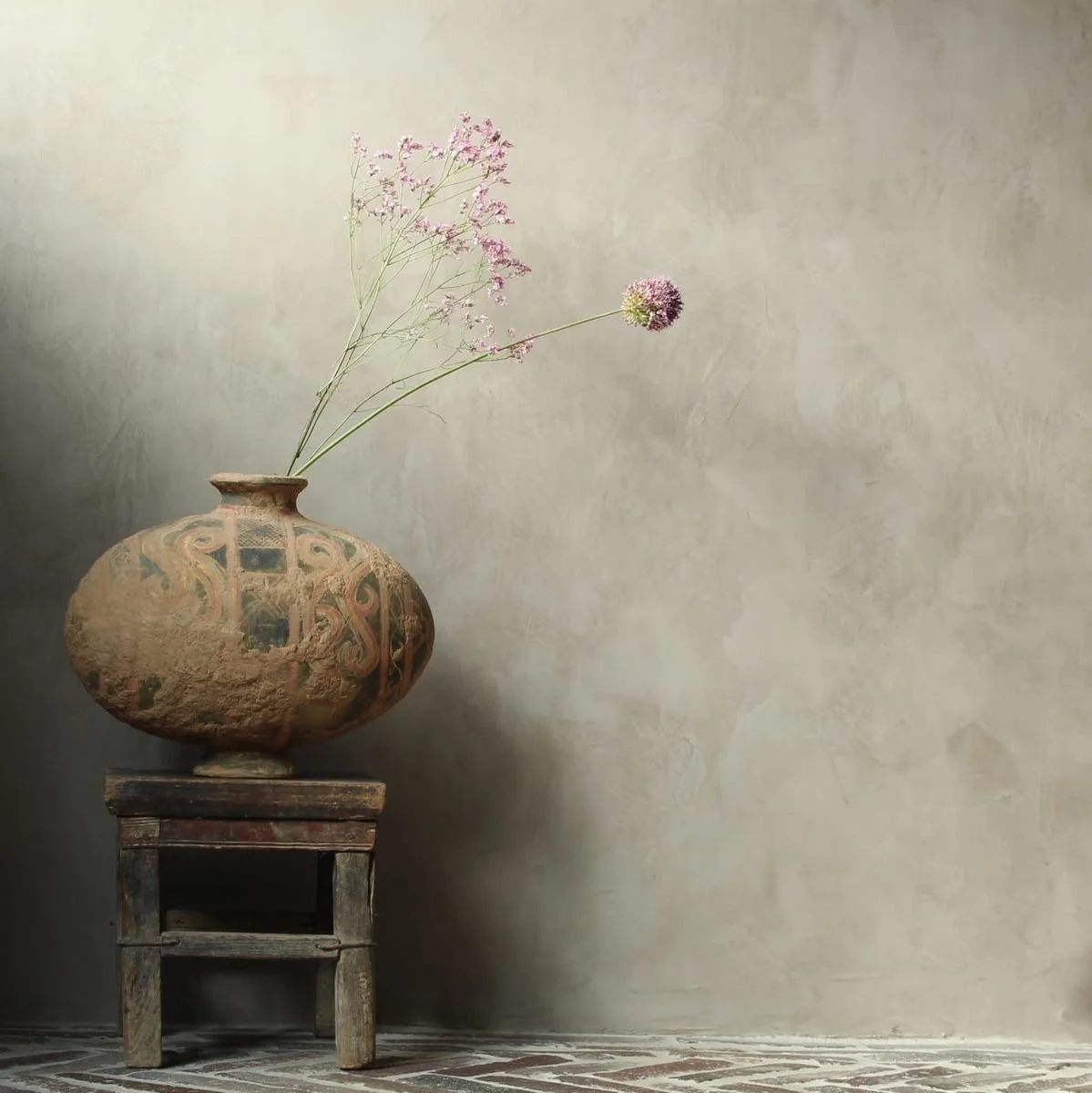
Today the lime most people meet is a thin wash. Applied in several translucent coats, it lets the color vary from spot to spot instead of sitting flat and opaque. Flat, uniform, one-note: the wall equivalent of a conference-room smile. It's not wrong, but it can feel a little sterile. A lime wall feels closer to a place than a product.
The craft
Lime wash is not "paint, but chalkier." The skill is in preparing the wall, reading it, and building thin, uneven layers with the brush. Some makers market it as easy, with no on-site painter or expert needed, and for a first project that can be true. I'd say the craft lives in the judgment, not the brushstroke.
Think it through
Nature inside won't come from one finish. It comes from many choices: color, texture, light, materials. Windows and skylights matter as much as walls, and I'll come back to them. For now, next time you choose a finish, ask what it's made of, where the idea came from, and how it will feel at 7 a.m. in the room you live in most.
Some of the images used in this blog are stock images *
