
Rethinking Home
Multi-Generational & Communal Living in Today’s Urban Landscape
There’s a quiet shift happening in how we think about home.
For a long time, the dominant narrative has been clear: find a single-family house and build independence. But for many people today, especially those living in places like the Bay Area and Seattle, that model is becoming harder to access, and in many ways, less aligned with how we actually want to live.
So the question becomes:
What does home look like now?
A Return to Proximity, Not Just Ownership
More and more, we’re seeing clients ask a different set of questions:
How can we live closer to family without sacrificing privacy?
Is it possible to share land and resources while still having autonomy?
Can we design spaces that support both independence and interdependence?
At its core, this isn’t just a housing question.
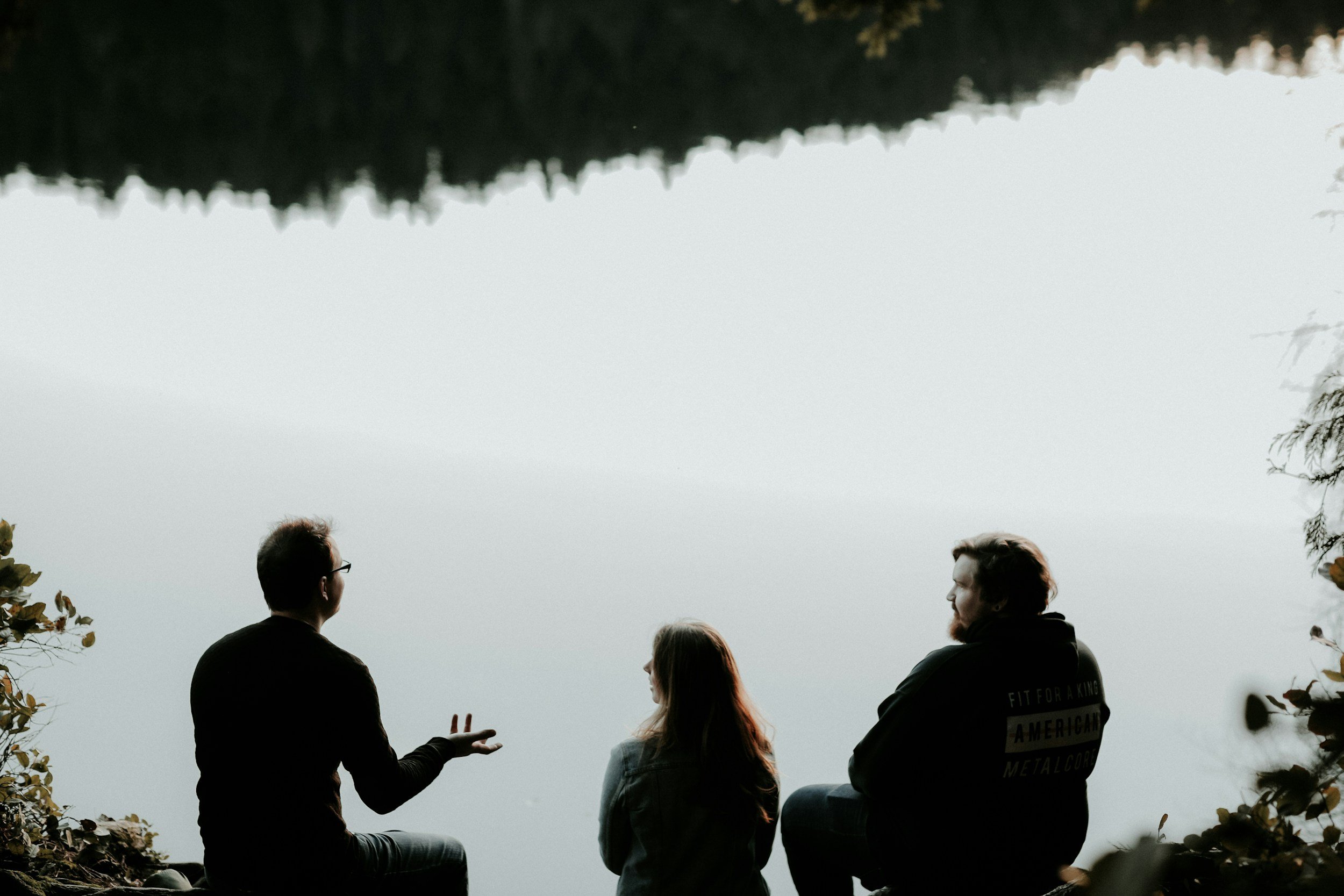
It’s about care, community, and continuity. There’s a growing desire to live in ways that feel more connected to our families, to our communities, and to the rhythms of daily life that don’t rely on isolation to function.
Urban Living, Reimagined
One of the biggest misconceptions around communal or multi-generational living is that it requires large parcels of land or rural settings. In reality, many urban environments already support this kind of living, you just have to approach design differently.
Zoning across much of California and Washington increasingly allows for:
Accessory Dwelling Units (ADUs)
Detached ADUs (DADUs)
Multi-unit configurations on traditionally single-family lots
When approached thoughtfully, these frameworks allow us to create multiple homes within one property, without losing the sense of warmth, scale, and openness that people associate with a single-family house.
This is where design becomes essential.



Designing for Both Privacy and Community
At OTO Design, we think of communal living not as density but as intentional proximity.
Each home should feel complete on its own:
Private entries
Defined indoor-outdoor spaces
Clear boundaries and autonomy
And at the same time, the overall site can offer:
Shared courtyards
Collective gathering spaces
Opportunities for connection that happen naturally, not forcefully
This balance is what makes multi-generational living work. It’s not about living on top of each other it’s about living alongside one another, by choice.
A Case Study: Capitol Hill, Seattle
We’re currently designing a home on a 40’ x 60’ urban lot in Capitol Hill that explores this idea in a very real way.
Within a compact footprint, the project accommodates three separate households:
A three-bedroom home for a growing family
A two-bedroom unit
A one-bedroom unit
Each home has:
Its own private entrance
Its own outdoor space
A sense of independence and ownership
At the center, a shared courtyard creates a space for connection whether that’s shared meals, childcare support, or simply being near one another.
This is not an apartment building. It’s a small, intentional community, designed within the constraints of a standard urban lot.
